
How the Roman Empire Moved Vehicles and Goods Across Vast Distances
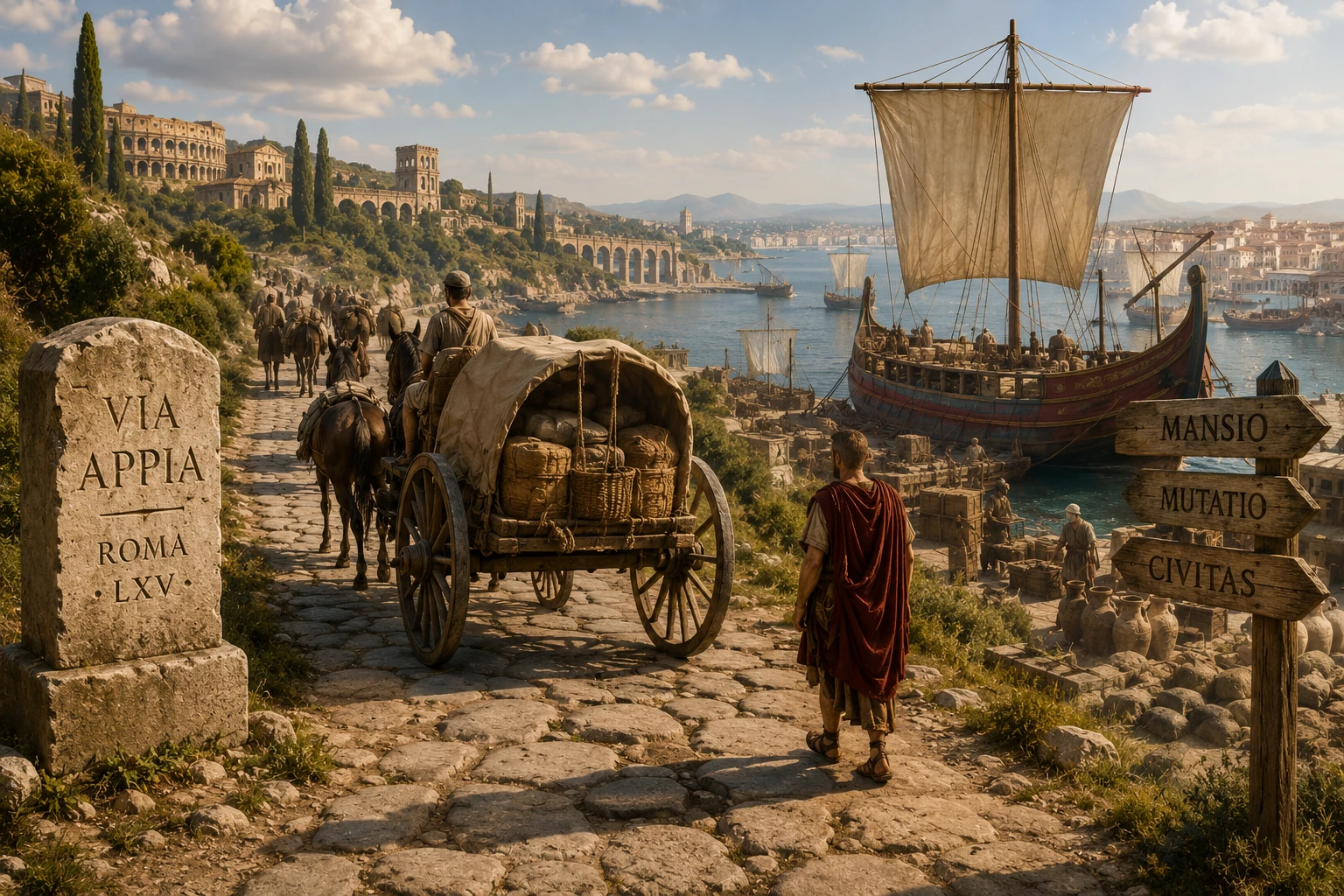
The Roman Empire stretched across an enormous area, creating a logistical challenge that would be familiar to modern governments and transportation companies. Food, construction materials, military supplies, messages, people, and vehicles all had to move between cities and provinces, sometimes across thousands of miles.
Rome obviously lacked trucks, trains, and modern shipping companies, but it developed a remarkably sophisticated transportation network. Roads, carts, pack animals, ships, and organized stopping points helped keep people and goods moving throughout the empire.
Roman Roads Made Overland Transportation Possible
Roman roads are among the empire's most famous engineering achievements. The extensive network connected settlements and helped armies, travelers, and goods move across Roman territory. Major routes such as the Via Appia provided relatively direct connections between strategically important locations.
Goods traveling overland could be loaded onto carts and wagons pulled by horses, mules, or oxen. Pack animals were another option, particularly where the cargo or conditions made a wagon impractical. Travel was still considerably slower and more difficult than it is today, but dependable routes made long-distance movement much more manageable.
The Cursus Publicus Kept the Empire Connected
One of the closest Roman comparisons to an organized modern transportation network was the cursus publicus. Developed under Augustus, this imperial system supported official communication and travel along major routes. Stations were established along roads where authorized travelers could obtain fresh transportation. There were mansiones, which offered accommodation, and mutationes, where animals and vehicles could be changed. Records even refer to officials being entitled to specific numbers of donkeys, mules, and carts.
Rather than expecting the same animals or equipment to complete an enormous journey, the system provided resources at different stages. In that respect, it demonstrated an important principle of logistics that remains relevant today: long journeys become easier when transportation is organized as a network.
Moving Vehicles Then and Now
Romans used several types of wheeled vehicles, including carts and carriages. These vehicles were valuable pieces of equipment, although there was no direct Roman equivalent of today's commercial auto transportation industry.
Modern transportation nevertheless solves a similar underlying problem: getting an important vehicle where it needs to be without necessarily driving it the entire distance yourself. Today, someone relocating or purchasing a vehicle remotely might use Milwaukee car transporters to arrange its collection and transportation. Instead of relay stations, draft animals, and Roman roads, modern carriers use vehicle transporters, highways, logistics networks, and coordinated pickup and delivery. The technology has completely changed, but the need to organize valuable vehicles and cargo efficiently across long distances certainly has not.
Ships Carried Huge Quantities of Goods
Roads were only part of Roman transportation. For large quantities of cargo, traveling by sea could be significantly cheaper than moving goods over land. Merchant ships transported products throughout the Mediterranean and connected ports with wider trading networks.
Once goods reached a port, they could continue their journey using rivers, roads, wagons, or pack animals. This combination of transportation methods resembles modern logistics, where cargo might travel by ship before continuing by truck to its final destination.
An Empire Dependent on Transportation
Rome could not have functioned on such a vast scale without effective transportation. Roads connected distant territories, ships carried large cargoes, and systems such as the cursus publicus helped official travelers and communications move efficiently.
Modern logistics operate on an entirely different technological level, but the basic challenge would have been recognizable to the Romans. Whether moving a wagon between Roman provinces or transporting a car between American cities, the objective remains remarkably similar: finding the safest and most practical way to get something valuable from one place to another.
Related Posts
Geta: The Tragic Co-Emperor Whose Life Was Cut Short by Fraternal Rivalry
Geta, the younger son of Septimius Severus, is a figure largely overshadowed by his more domineering brother, Caracalla. Often relegated to the role of the quiet, less ambitious sibling, Geta’s life was tragically cut short by a family feud that shook the Roman Empire to its core. Unlike his brother, Geta...
Read More
Caracalla: The Emperor of Bloodshed and the Architect of Roman Citizenship
Caracalla, son of the formidable Emperor Septimius Severus, is a complex and contradictory figure in Roman history. Often remembered for his brutality and paranoia, he is equally renowned for one of the most far-reaching edicts in Roman law. His reign was marked by a tumultuous blend of violence and reform. Shortly...
Read More
From Ancient Rome To Today: 4 Games Played By Emperors And Their Modern Equivalents
In history, Ancient Rome had rulers who enjoyed games that involved intelligence and risk-taking. The interesting part is that some of these games have now evolved to their modern versions that still entertain people. When we look at the Ancient Roman history of emperors having fun, most of them went for...
Read More
Septimius Severus: The General Who Became Emperor and Reformed the Roman Empire
The tumultuous period following the assassination of Commodus saw a rapid succession of emperors, each vying for power in a chaotic political landscape. Among these contenders, Septimius Severus emerged as the ultimate victor. A seasoned general with a reputation for military prowess and political acumen, Severus proved to be a...
Read More
Year of the Four Emperors: A Visual Timeline
📅 68 AD April: Galba, governor of Hispania Tarraconensis, and Vindex, governor of Gallia Lugdunensis, rebel against Emperor Nero.May: The Rhine legions defeat and kill Vindex in Gaul.June 8: The Senate declares Nero a public enemy.June 9: Nero commits suicide; Galba is recognized as emperor.November: Vitellius is appointed governor of Germania...
Read More
Commodus: The Emperor Who Blurred the Lines Between Rome’s Greatest Ruler and Its Most Notorious Madman
Commodus: a name that evokes both awe and abhorrence. Son of the legendary Marcus Aurelius, philosopher-emperor and author of the iconic Meditations, Commodus inherited a realm at the zenith of its power. Yet, his reign would irrevocably alter Rome's trajectory. Was he a brilliant general, a cunning politician, or a megalomaniacal...
Read More
Julius Caesar
Julius Caesar, a brilliant general and statesman, played a critical role in the shift from the Roman Republic to the Roman Empire.
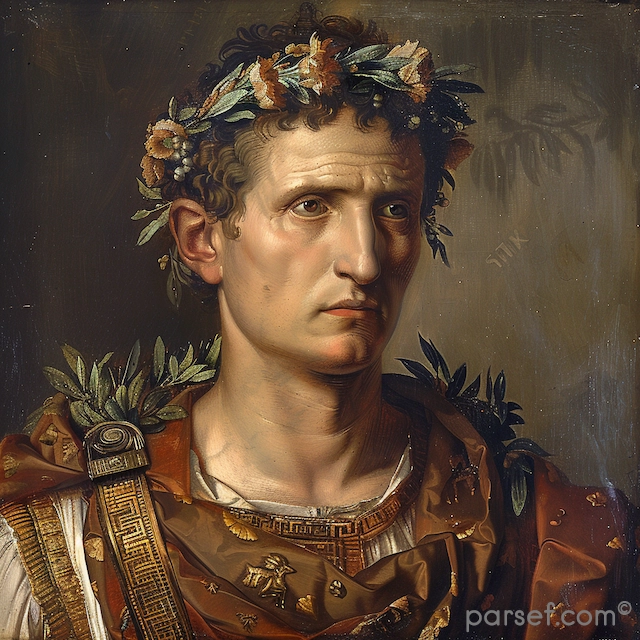
Augustus
Augustus, the first Roman emperor, ushered in an era of peace and prosperity known as the Pax Romana.
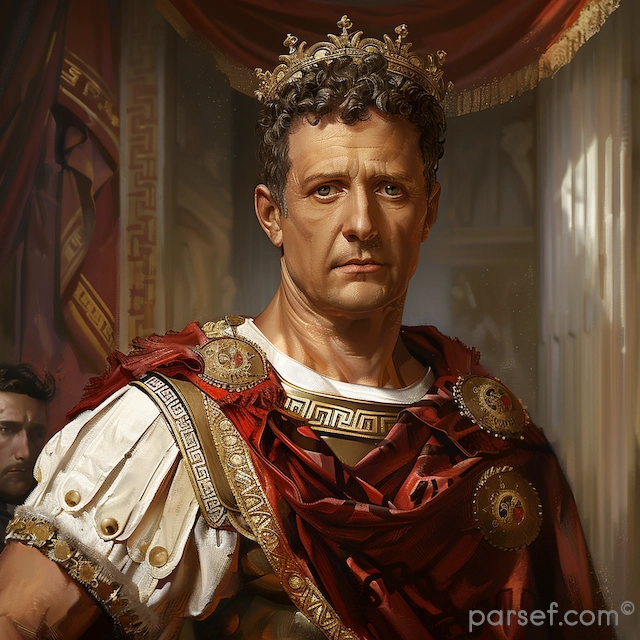
Tiberius
Succeeding Augustus, Tiberius, a skilled military leader, became a controversial emperor known for both stability and a later reign of terror.
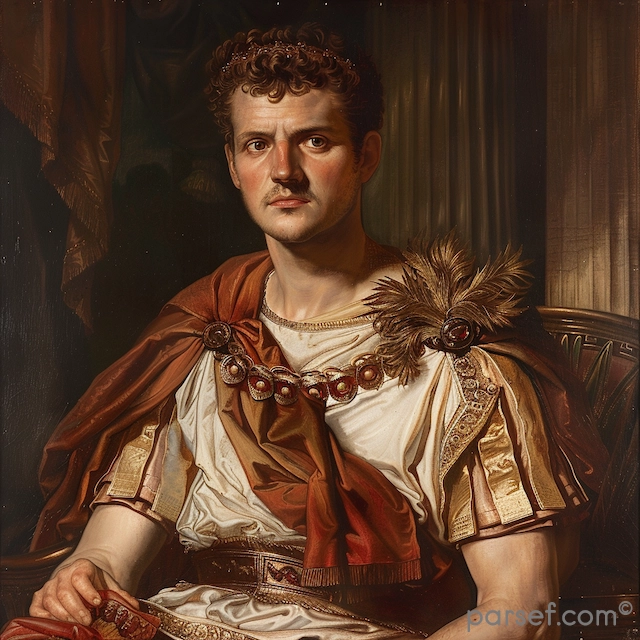
Caligula
Caligula, notorious for his cruelty and extravagance, ruled Rome for just four chaotic years.
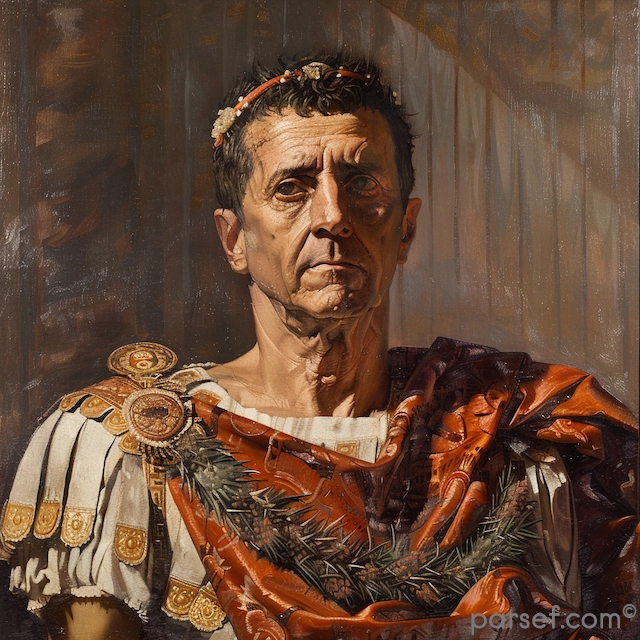
Claudius
Overcoming a reputation for disability, Claudius proved to be a capable emperor who expanded the Roman Empire and improved its infrastructure.
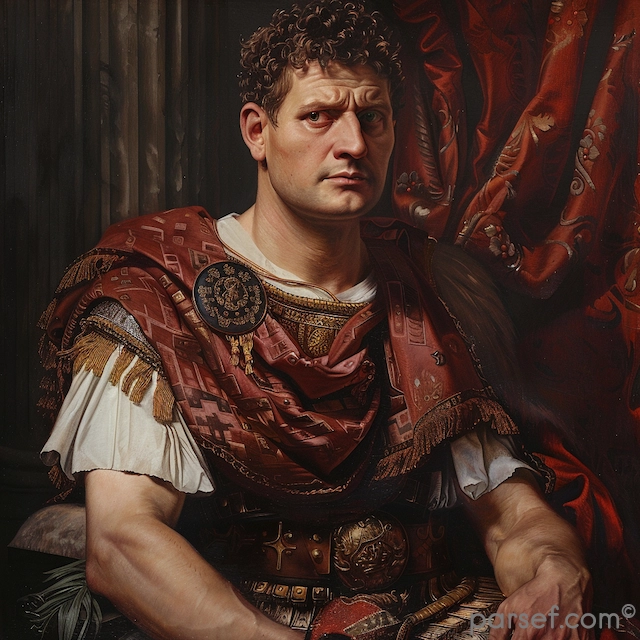
Nero
Nero, the last emperor of the Julio-Claudian dynasty, is remembered for both his early promise and later descent into tyranny.
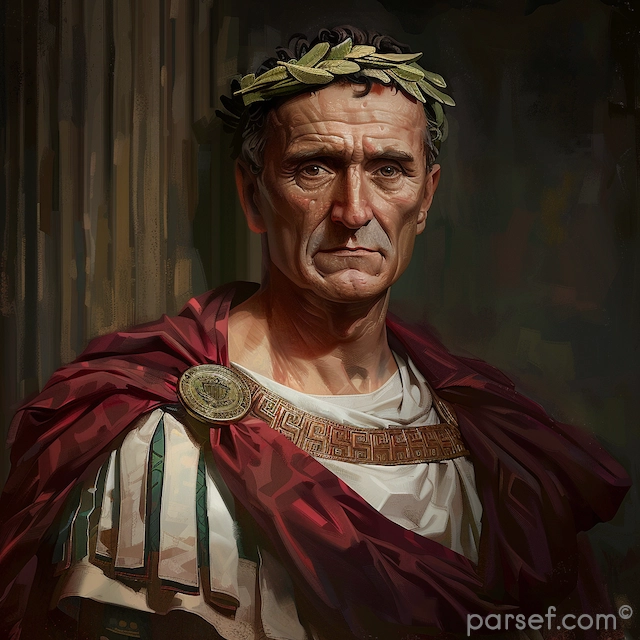
Galba
Galba, a seasoned aristocrat who rose to power after Nero's suicide, faced a turbulent reign marked by financial woes and military discontent.
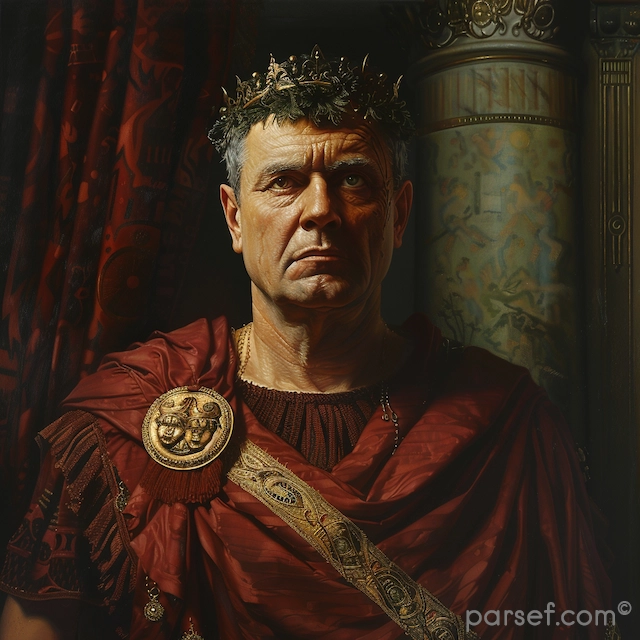
Otho
Ruling for only three months in the tumultuous Year of the Four Emperors, Otho seized power but was defeated and committed suicide.
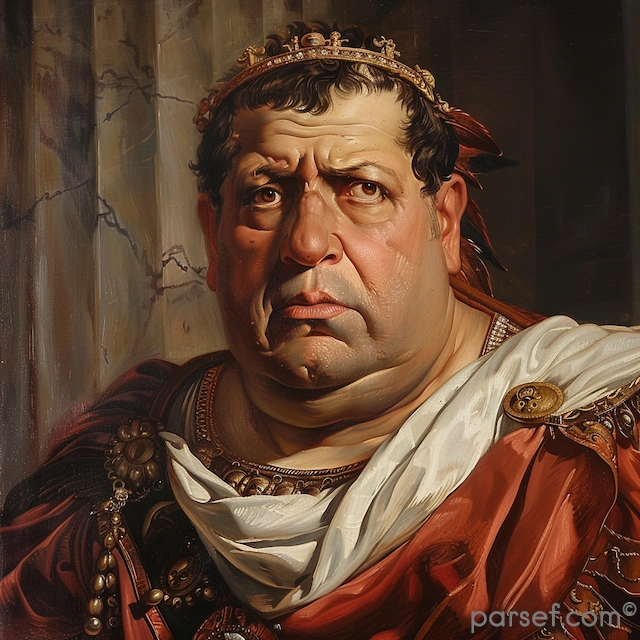
Vitellius
Briefly holding power in 69 AD during the Year of the Four Emperors, Vitellius was known for his indulgence and was ultimately overthrown and killed.
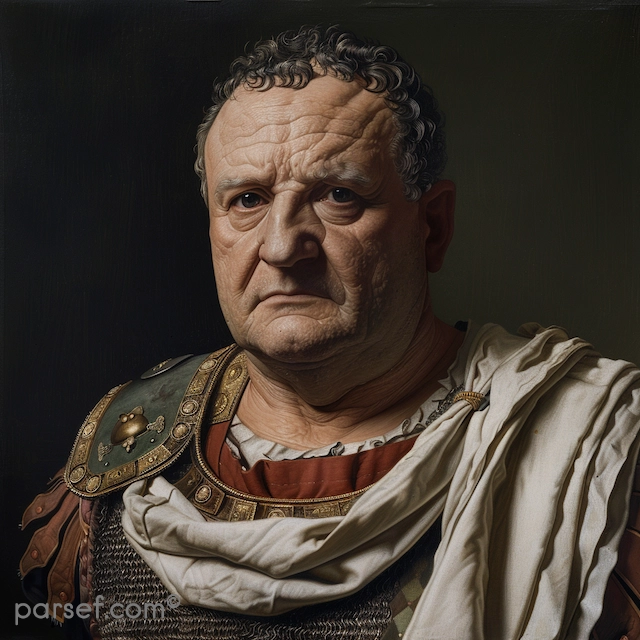
Vespasian
Rising from humble beginnings, Vespasian restored stability to the Roman Empire after a civil war and launched an ambitious building program.
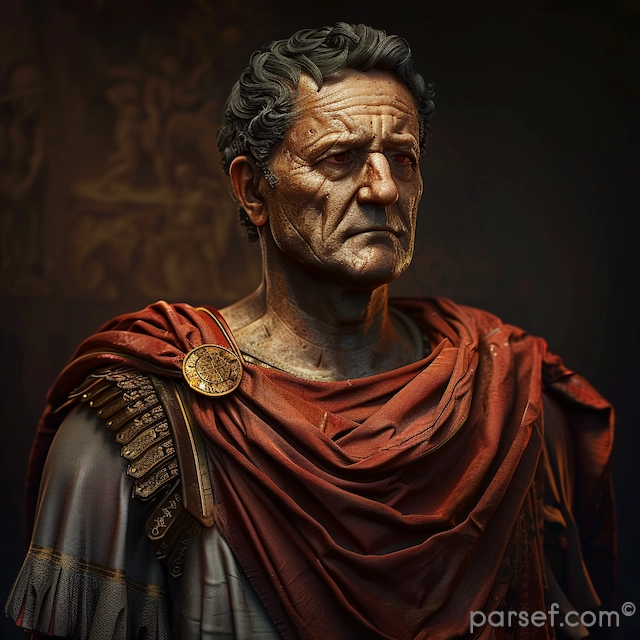
Titus
Son of Vespasian, Titus became emperor known for both his ruthless conquest of Jerusalem and his generosity during disasters.
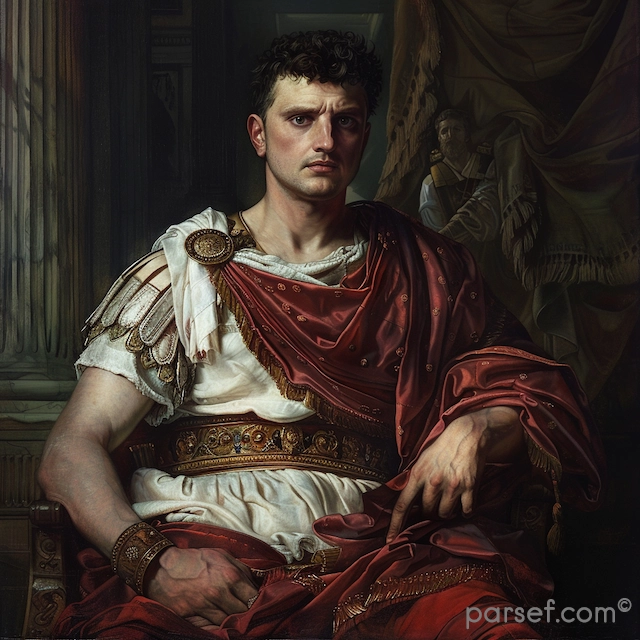
Domitian
Domitian, the last Flavian emperor, strengthened the Roman Empire's borders and economy but was seen as a tyrant by the Senate.
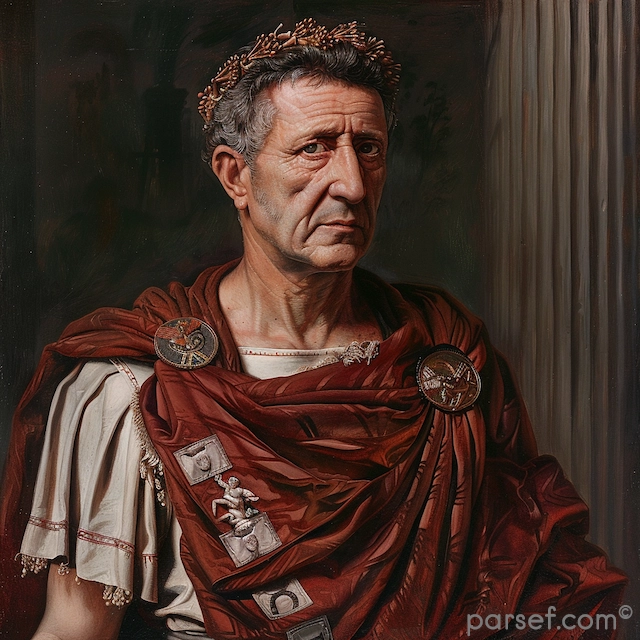
Nerva
Nerva, the first of the Five Good Emperors, ushered in a new era of stability after a period of violence.
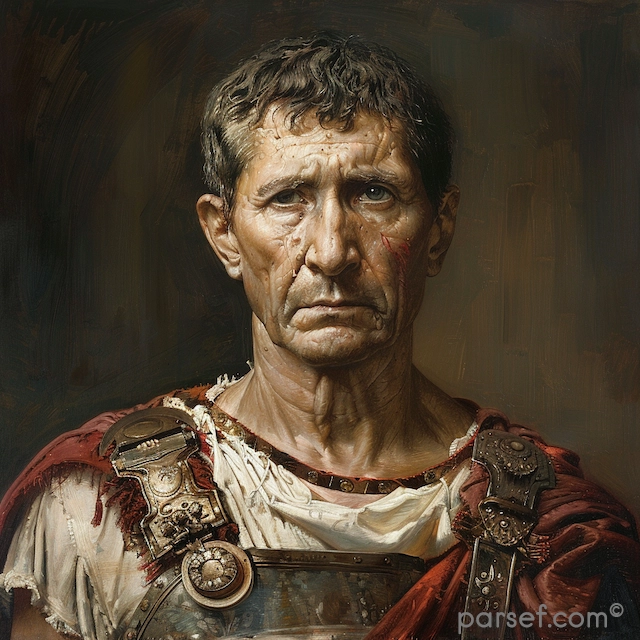
Trajan
Renowned for his military conquests and public works projects, Trajan led the Roman Empire to its greatest territorial extent.
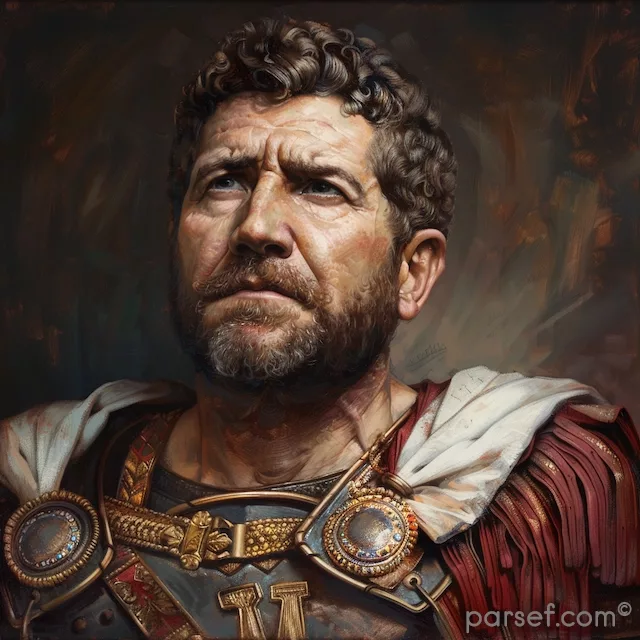
Hadrian
Hadrian, a philhellene emperor known for Hadrian's Wall, consolidated the Roman Empire and focused on internal development.
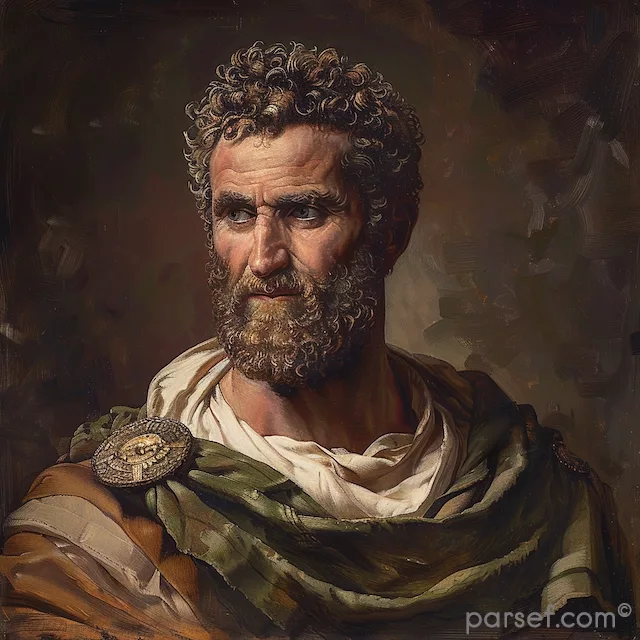
Antoninus Pius
Antoninus Pius, known for his peaceful reign and devotion to public works, was considered one of the Five Good Emperors.
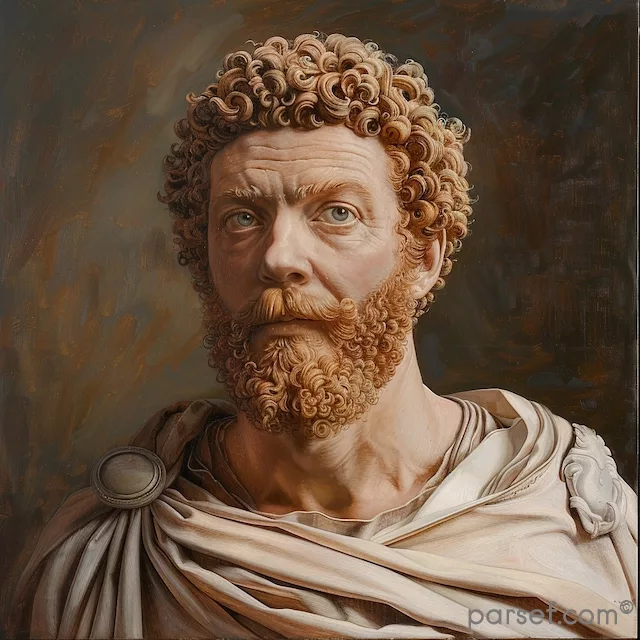
Marcus Aurelius
Marcus Aurelius, the last of the Five Good Emperors, was both a philosopher king and a stoic leader who fought relentlessly to defend the Roman Empire.
Commodus
Son of Marcus Aurelius, his reign marked the end of the Pax Romana and is often considered the beginning of the decline of the Roman Empire.
Pertinax
A short-lived emperor, he ruled for just three months before being assassinated by the Praetorian Guard.
Didius Julianus
Bought the throne in an auction held by the Praetorian Guard, his reign lasted just over two months before he was killed.
Septimius Severus
Founder of the Severan dynasty, he secured his position after defeating his rivals in a civil war.
Caracalla
Known for issuing the Antonine Constitution, granting Roman citizenship to all free men in the Empire.
Geta
Co-ruled with his brother Caracalla, but was murdered by him after their father’s death.
Macrinus
A usurper who became emperor after arranging the assassination of Caracalla. He was overthrown and killed.
Elagabalus
Known for his eccentric and controversial religious practices, he was eventually assassinated by the Praetorian Guard.
Severus Alexander
The last emperor of the Severan dynasty, his reign ended when he was assassinated by his own troops, marking the start of the Crisis of the Third Century.
Maximinus Thrax
Learn how his military background, brutal tactics, and short-lived rule marked the beginning of the Crisis of the Third Century.